Showing posts with label breath. Show all posts

Wednesday, December 14, 2016

Kids with Anxiety Part 5: Relaxation


Initiating Relaxation

The key to overcoming anxiety is to learn to initiate relaxation.  Sometimes being quiet and still can be difficult for kids, but for those with anxiety, it can be even more of a challenge.  In this blog, I'll focus on a tool called yoga nidra, which is a deep relaxation.

We start the relaxation response by breathing, as I discussed in Part 1.  Movement often helps kids with anxiety.  Some helpful yoga poses were covered in Part 2.  Relaxation is different from the other meditation we discussed in Part 3.  In that meditation, we were trying to help the child to focus, while in relaxation, we're trying to help the child to let go.  Gratitude (Part 4) is both a tool for changing the way the mind thinks and something to focus on, as well.  This blog focuses on total relaxation (yoga nidra).  Ideally, a person in yoga nidra is neither fully awake nor fully asleep, but it's really okay if the child falls asleep.  In fact, I see it as a compliment when students fall asleep.  It means I have helped them to truly relax and that they trust me enough to completely let go.

In order for children to relax completely, they must feel comfortable and safe. Then, they can begin to draw attention to specific parts of their bodies and hopefully relax them.  Since the mind is busy concentrating on specific parts of the body, it can't be worrying.  As the body relaxes, so does the mind!


5 Parts of Yoga Nidra

This basic yoga nidra includes five parts: breath focus, body scan, rotation of consciousness, journey, and return.  The breath focus is similar to what we did in Part 1.  The body scan is a quick release of tension throughout the body.  The rotation of consciousness is a fancy term for a very slow, very specific body scan.  We ask the child to bring his attention to each part of his body, one at a time.  The journey is a description using all of the senses.  In our example at the end, we have an open-ended description of a place the child feels safe in.  The journey can describe anything, but it's important that it's a place the child enjoys and feels safe.  The return is when we bring the child back into the room and the present moment.  A basic yoga nidra script is included at the end of this post.

Getting Comfy

Begin by having your child lay comfortably on her back on the floor or bed.  If she has an eye pillow, she may want to place it across her eyes or forehead.  Her back may feel more relaxed if a pillow is placed under her knees.  If she's comfortable, it's best not to have a pillow under her head.  Ask her to close her eyes or lower her gaze. Remind her that she always has a choice.

Advanced Yoga Nidra

You can extend the length of the rotation of consciousness as the child learns to relax for longer periods of time.  You can extend the pauses between body parts by waiting 1-3 breaths before naming the next part.  You can also be more detailed with the parts you name.  For example, instead of just saying "ear," you could say, "ear lobe, the folds of the ear, the inner ear, the sounds coming in your ear." You can also extend the journey to include more detail.  For this blog, the script will be basic and best for beginners.


Yoga Nidra Script

Move in any way that will make you a little more comfortable.  We are going to start Yoga Nidra.  This activity will help you relax.  If you can, try to stay awake.

(Breath Focus) Think about your breath.  Notice how it feels as it comes in your knows, travels down your throat, and fills up your chest.  Maybe you feel your belly get bigger too.  Then feel the air as it goes out.  Your belly and chest relax as the air leaves your lungs and travels back up your throat and out your nose.  (pause)  Feel your breath come in (pause) and go out (pause for several breaths).

(Body Scan) Slowly think about each part of the front of your body, starting at the top of your head, and relax it.  Your face (pause), your chest (pause), your belly (pause), your arms (pause), and your legs (pause).  When you get to your feet, begin think about the back of your body and relax it.  Your legs (pause), your bottom (pause), your back (pause), your arms (pause), your neck (pause), the back of your head (pause).  Relax your whole body (pause for several breaths).

(Rotation of Consciousness) Think about the top of your head (pause).  The spot where your head touches the mat (floor or pillow) (pause).  Your forehead (pause), your eyes (pause), your nose (pause), your cheeks (pause), one ear (pause), the other ear (pause), your mouth (pause), your chin (pause).  Your whole face (pause).  Your whole head (pause).

Think about your neck (pause), your chest (pause), your belly (pause).  Think about your upper back (pause), your middle back (pause), your lower back (pause).  Think about your right shoulder (pause), your right arm (pause), right hand (pause), your fingers (pause).  Your whole right arm (pause). Think about your left shoulder (pause), your left arm (pause), left hand (pause), your fingers (pause).  Your whole left arm (pause).

Think about your right hip (pause), leg (pause), foot (pause), toes (pause).  Your whole right leg (pause). Your left hip (pause), leg (pause), foot (pause), toes (pause). Your whole left leg (pause). Your whole body (pause).  Your whole body together (pause).

Let your body feel heavy like it's sinking down into the mat, down into the floor (pause).  Relax (pause).  Feel heavy. (pause for a few breaths)

(Journey) Think about a place where you feel safe and comfortable (pause).  Picture this place in your head (pause).  Try to use all of your senses to make this place really clear in your mind (pause).  Imagine what you would see in this place (pause).  Imagine what you would smell (pause), what textures you might feel (pause).  Imagine what you might taste in this place (pause) and the sounds you might hear (pause).  If you want, you can imagine yourself walking around in your safe place (pause).  Maybe you are picking things up and looking at them (pause).  Maybe you are just resting there (pause).  Whatever you are doing, you feel safe and secure in this place (longer pause).

Remember that you can come back to your safe place any time you need to (pause).  It is always there for you (longer pause).  

(Return)  Begin to take deeper breaths (pause).  Bring yourself back into this room, the real room that you are in (pause).  Wiggle your fingers and toes (pause).  Stretch in any way that feels good to you (pause).  Roll on to one side for a moment and begin to notice the light in the room (pause).  Push yourself up to a comfortable seat (pause).  Thank you for allowing me to lead you in yoga nidra today.  The light within me honors the light within you.  Namaste.

Thank you!

Have you tried Yoga Nidra before?  How did you feel afterwards?  Did you try this script with your child?  What did they think of it? I'd love to hear from you!


Wednesday, November 16, 2016

Kids with Anxiety Part 3: Meditation


So far in this series on helping kids with anxiety, we looked at breath practices and yoga poses.  In this post, I'll share meditation ideas that help kids with anxiety.  


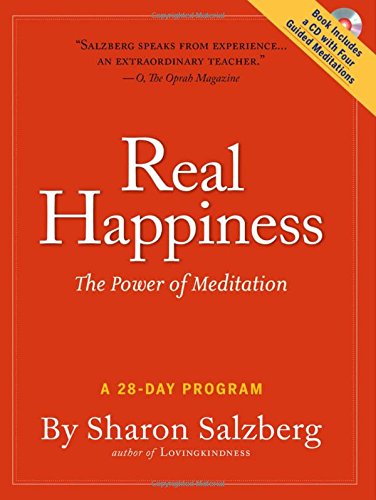
There are lots of different types of meditation.  For a great resource that includes audio and text guided meditations, check out Sharon Salzberg's book Real Happiness.  This is a practical, non-religious book that teaches different types of meditation for everyone!  It is written for adults, but I've used many of these ideas with kids.

According to Sharon Salzberg, there are three main skills needed for meditation: concentration, mindfulness, and lovingkindness.  We will start with concentration.  First, we work on sustaining the child's attention on something.  This can be focusing on the breath using one of the breath practices, focusing on an object (like a candle, stone, or statue), focusing on the sound of your voice as you read them a guided meditation, or some combination of these.  Guided meditations can help kids sit still longer because they are similar to listening to a story.  The objective is to keep the attention coming back to the focus.  Even though minds will wander, we keep coming back to the focus.

Many kids have trouble sitting still so it's important to have realistic expectations for how long they can sit.  You may start with only 30 seconds and work your way up to 3 or even 5 minutes!

If the child has trouble sitting up straight (yoga poses will help with this) then, it's okay to let her sit in a chair or against a wall or lay comfortably on the floor or bed.

Meditating is often easier for kids after they've moved around some.  They could do some of the suggested poses, take a walk, sing, or jump on a trampoline.  We want to set them up for success and letting them burn off some of their energy out first is a good start!

Once the child has moved around, have him sit or lay comfortably.  My daughter really enjoyed sitting and having a candle to focus on during meditation.  My son preferred to have his eyes closed and lay down.  Guide the child through a few breaths with longer exhales or use one of the breath practices.  The first few times you try meditation with your child, you may want to use a script for guided meditation.  Avoid music if possible because it can be distracting, especially for beginners.

What follow is a sample guided meditation script.  Feel free to change or adapt this to fit your needs.  You can read it word for word, but the parts in parentheses are just helpful hints for you.


Sample guided meditation script:

Take a comfortable seat or lay down on the floor.  You can close your eyes or soften your gaze downward (or look to an object if you're using one).  (pause)  Today, I'm going to guide you in a short meditation.  This just means we'll sit quietly and think about our breath for a few moments.

Begin by taking a deep breath in through your nose and slowly letting it out through your mouth. (Do this with the child.)  This is called a cleansing breath.  Let's do that one more time (do this with the child again).  Now, begin to breathe in and out through just your nose (unless they have a cold or sinus issue).  You can breathe in for a count of 4 (do this with the child) and out for a count of 6 or 8 (Sometimes it helps if you exaggerate the sound of your breath so they can hear you a few times.)  (pause for a few breaths)

Begin to concentrate on the way your breath feels.  Think about the air coming in your nose, going down your throat, and filling up your chest.  Notice it leaving your lungs, coming up your throat, and going out through your nose.  (pause) Pay attention to the temperature and feel of the air as it comes in and goes out.  Notice if it feels cooler or warmer at different parts of the breath.  Notice if the air feels dry or moist.  (pause)

(If this was enough for your child, skip to the closing.  If not, you can continue here.)  Think about your breath and notice where you feel your breath the easiest.  It might be in your nostrils, your throat, your chest, your belly, or somewhere else.  Bring your attention to this spot. (pause) Think about how the air feels when it passes this spot.  Notice if the temperature or feel of the air changes. (pause)

Think about your belly.  You can even put your hand on your belly if it helps.  Feel your belly rise and fall as you breathe.  (slowly in time with the child's breath) Rise and fall.  Rise and fall. It moves like a wave at the beach.  The air is coming in and out.  In and out.  In and out. (pause)

(Closing)  Begin to take deeper breaths.  (pause)  Wiggle your fingers and your toes.  (If the child is laying down, have him roll onto his side and lay for a moment or two before sitting up.)  Bring your hands to heart center. (pause) When you're ready, you can open your eyes.  Thank you for allowing me to lead you in your meditation practice today.  The light within me honors the light within you.  Namaste. (The child repeats the word "namaste," which means the light within me honors the light within you.)

When you're ready for a more advanced meditation with your child, you can try Lovingkindness meditation or one of the great ones from Sharon Saltzberg's book.

How did these techniques work for you and your child? Do you have any anxiety relieving ideas that work for your kiddo?


Wednesday, November 2, 2016

Kids with Anxiety Part 1: The Breath

I received my first question! It's about how to help a pre-teen with anxiety. I'm writing this blog with a child in mind, but all three of these techniques work for just about any age, including adults.

Hi Rhonda!! I love your blog idea! ... Listen, one thing happened today and I need some advice on how I could help him, preferably with yoga:
My son (now 9) is very sensitive and anxious (just like myself). Today, he has heard wild stories of those "horror clowns" and this freaked him out. He hardly watches TV and he is not interested in social media so most/all of this is going on in his mind...How can I ease his uneasiness with the evil he hears of in school etc.? Any good tips that work for kids of his type?Thank you!! S

Thank you for writing to me!  It is common for a child with anxiety to have a parent with anxiety.  My daughter, my mother, my sister, and my grandmother have all dealt with anxiety and depression.  Practicing anxiety busting techniques together may help both of you!  In order for these techniques to be effective, they need to be practiced for a few minutes every day when the child is not upset or anxious.  This helps kids learn the techniques and connect them with calmness and good times.

The first area to help a child with anxiety is the breath.  Before we can address the current trigger (scary clowns), we must first help your son to relax.  For anxiety, we want to make the exhale longer than the inhale because a elongated exhale tells our brain that we're safe.  If our brain thinks we're safe, it stops releasing stress hormones.  There are lots of different types of breath that have a longer exhale, but there are three that I would recommend for kids with anxiety:  counting breath, ha breath, and Kaki breath.


Counting breath is exactly what it sounds like.  The child counts the length of her inhale and her exhale, breathing in and out through the nose.  Slowly she tries to lengthen her exhale so it's twice as long as her inhale.  For example, if she inhales for a count of four, then she will gradually lengthen her exhale to a count of 8.  She can continue breathing in for a count of 4 and out for a count of 8 until she feels calm. This breath is great for busting anxiety because of the focus on the lengthened exhale.  Focusing on counting the length of the breath also gives the child's brain something to do in order to shut down the worrying.

The next breath is ha breath.  For this breath, the child breathes in deeply and then breathes out slowly with a "haaa" sound, like a long sigh.  Inhale through the nose, open the mouth and exhale making a long "haaaa" sound.  The child can repeat this breath until he feels calm. This breath also concentrates on extending the exhale and calming the nervous system.  The slight vibration of the sound also helps in calming anxiety.


For older kids who may want to be more private about their anxiety, Jodi Geoghan, advanced therapeutic yoga teacher, says you can use this breath in public without anyone realizing it by pretending there's something stuck on your phone screen.  Kids can inhale through their nose and then exhale their ha breath onto the phone or i-pod screen.  They can then wipe the phone on their shirt or pants to finish "cleaning" it.  This way, it simply looks like he's cleaning his phone, rather than dealing with his anxiety.


The last breath is Kaki breath (pronounced kŏ-kē) .  Kaki breath is like breathing through a straw. To beat anxiety, the child breathes in through the nose and out like she is holding a straw between her lips.  When the lips are pursed tightly, it slows down the rate of the exhale, telling the brain that she is safe so no more stress hormones are needed.  The child can hold her hand about 6 inches in front of her face and blow the air onto her hand.  This helps her to become aware of her breath and gives her something to focus on.


To help with the triggers for the anxiety, I recommend the book, How to Tame Your Thought Monster by Katie McClain. I don't make any money off of the purchase of this book.  It's just a great book that helps children, including my daughter, overcome anxious thoughts with a systematic and fun approach.  It's great for grown-ups too!

Next time, I'll share yoga poses to help kids with anxiety!

Comments System

Disqus Shortname